Patient feedback log and You said, we did poster
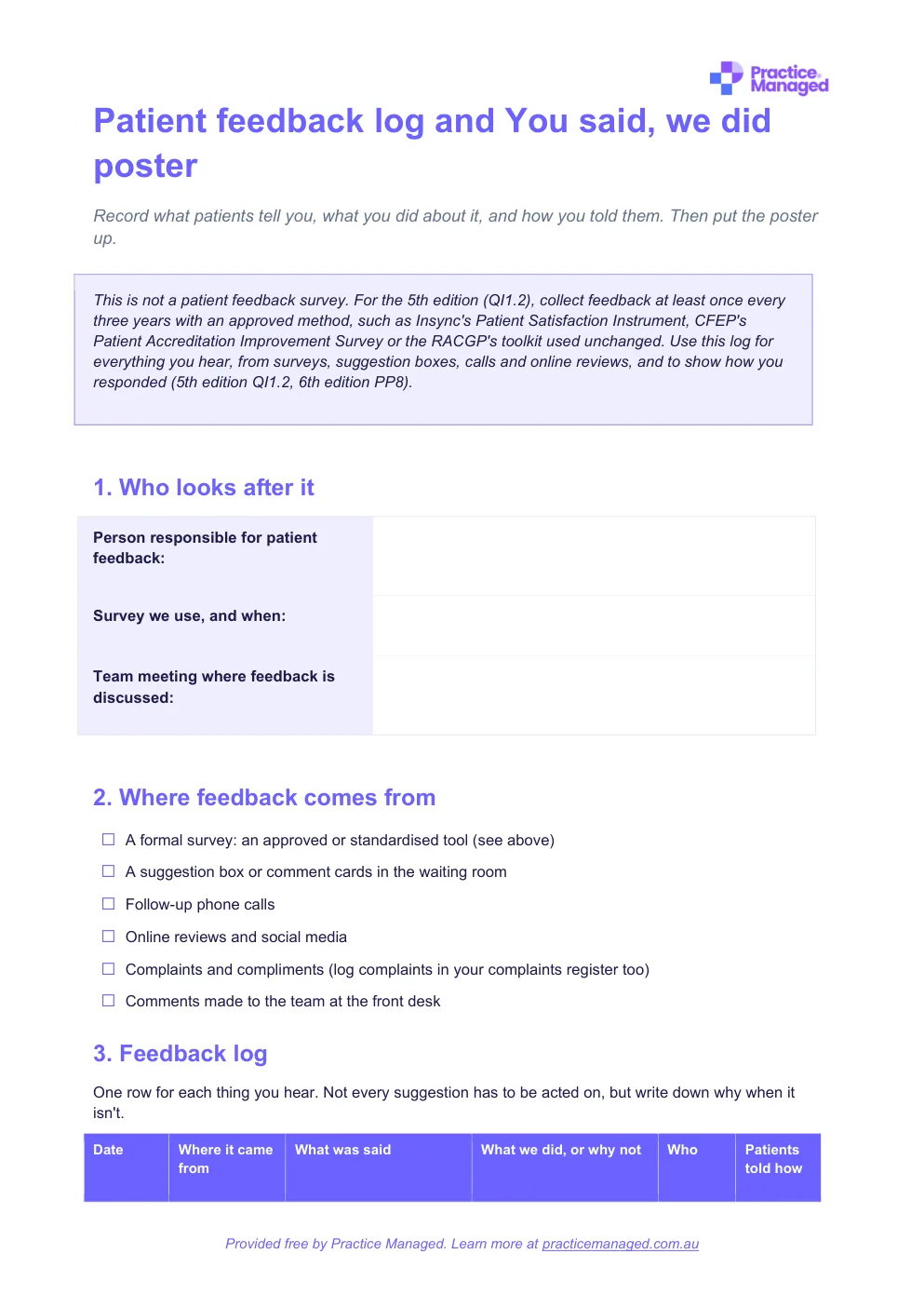
Record what patients tell you, what you did about it, and how you told them. Then put the poster up. This is not a survey: use it alongside an approved one.
What's inside
- A note on the approved surveys you can use for the 5th edition, such as Insync's and CFEP's.
- Where feedback comes from: surveys, suggestion boxes, calls, online reviews, complaints and comments at the front desk.
- A feedback log: date, where it came from, what was said, what you did or why not, who, and how patients were told.
- Team checks: discuss it at a meeting, send everyone a summary, and record improvements.
- A You said, we did poster page for the waiting room.
Who fills it in, and when
The person responsible for patient feedback, often the practice manager, adds a row whenever the practice hears something from a patient. Discuss the log at a team meeting, and update the You said, we did poster after each round of changes.
How to use it
- Name the person responsible and the survey you use.
- Add a row to the log whenever you hear something, and discuss it at a team meeting.
- Fill in the poster with what you changed, and put it in the waiting room and on your website.
Patient feedback log and You said, we did poster
Word · 74 KB · free
Which RACGP Standards it helps with
Supports 5th edition criterion QI1.2 (Patient feedback), which asks you to analyse, consider and respond to feedback and tell patients how you responded, alongside an approved method of collecting it. Also supports 6th edition criterion PP8 (Engaging consumers), which asks the practice to tell consumers how it has used feedback to improve care.
- 5th edition: QI1.2 Patient feedback
- 6th edition: PP8 Engaging consumers
An example
Example only: Date: 12 May. Where it came from: patient survey. What was said: hard to get through on the phone first thing. What we did: a second person on the phones from 8 to 9am. Who: practice manager. Patients told how: on the You said, we did poster and the website.
Common mistakes to avoid
- Using a homemade comment card instead of an approved survey for the 5th edition.
- Collecting feedback but not writing down what you did about it.
- Not telling patients what changed, which both editions ask for.
Goes well with
It goes with our guide Patient feedback in a GP practice: collecting it and acting on it.
Want to know where the rest of your practice stands? Take the free readiness check: ten yes-or-no questions, your score straight away, and a to-do list sent to your inbox.