Aggressive patient checklist
Before, during and after: the steps that keep your team safe, from the RACGP's guide on preventing and managing patient aggression.
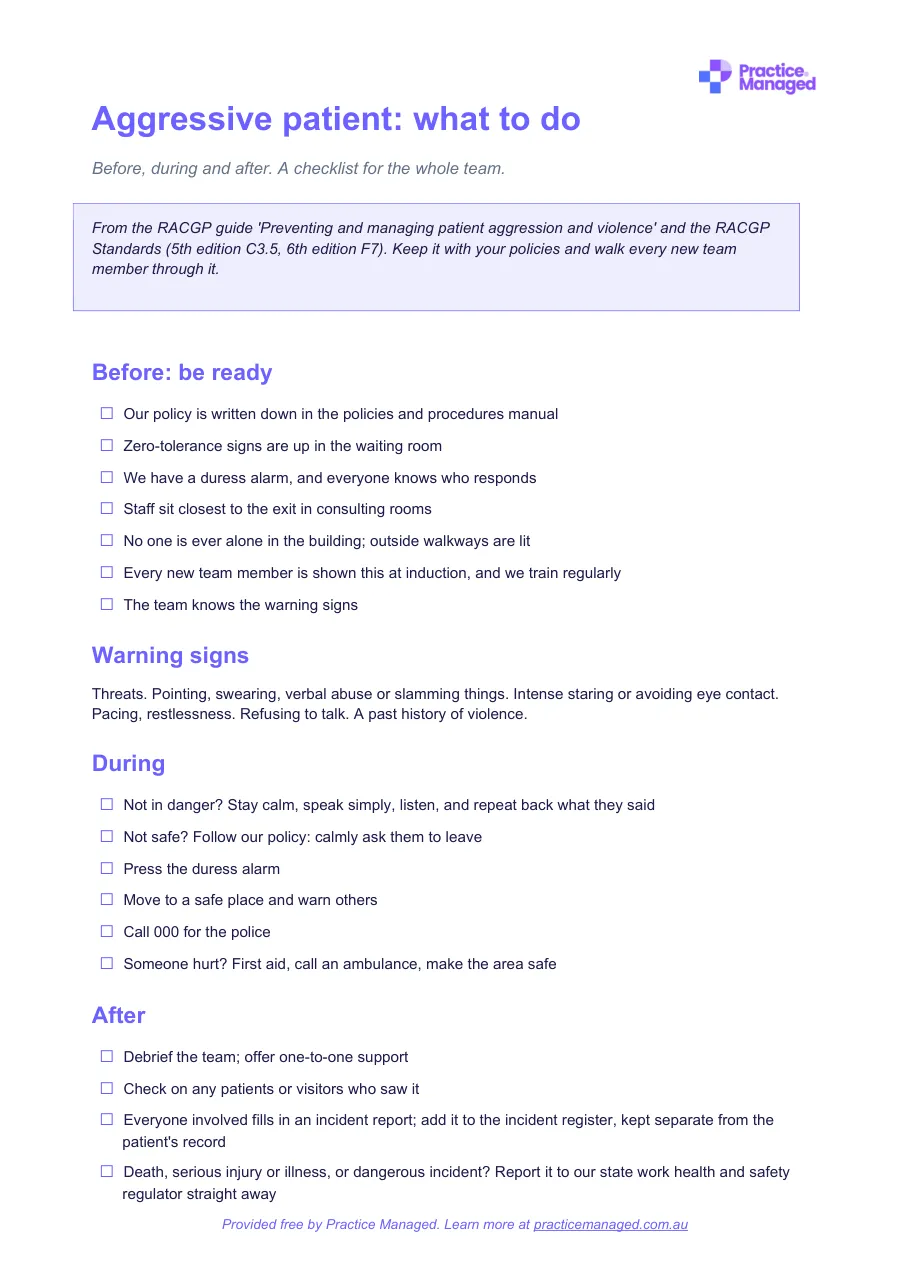
What's inside
- Before: the policy, signs, duress alarm, room layout, never alone, and training.
- The warning signs, and what to do during an incident, including calling 000.
- After: debrief, incident report, review, flagging the record, and when to report to your regulator.
Who fills it in, and when
The whole team uses it. The practice manager fills in who responds to the duress alarm and your regulator's phone number, and walks every new team member through it at induction. Tick the Before items when you set up; use During and After when something happens. Keep it with your policies, where everyone can find it. Go over the warning signs with the team, so they can step in early.
How to use it
- Fill in who responds to the duress alarm and your regulator's number.
- Walk every new team member through it.
- Keep it with your policies.
Aggressive patient checklist
Word · 73 KB · free
Which RACGP Standards it helps with
Supports 5th edition criterion C3.5 (Work health and safety) and 6th edition criterion F7 (Practice team culture, safety and involvement), which asks for systems to protect the team from violence and aggression. The 5th edition guidance suggests a zero tolerance policy and a duress alarm, and the checklist draws on the RACGP guide Preventing and managing patient aggression and violence.
- 5th edition: C3.5 Work health and safety
- 6th edition: F7 Practice team culture, safety and involvement
An example
Example only, After: team debrief held the same afternoon, one-to-one support offered to the receptionist, incident report added to the incident register, the patient's record flagged, and the policy reviewed at the next team meeting. Before that day, the practice had already ticked the zero-tolerance signs in the waiting room and named Jo Citizen as the duress alarm response person. No one was hurt, so nothing needed reporting to the regulator.
Common mistakes to avoid
- Putting the incident report in the patient's record: add it to the incident register, kept separate.
- Sending a warning letter or ending care before talking to your medical defence organisation.
- Leaving the duress alarm response person blank, so no one knows who comes.
Goes well with
It goes with our guide Managing aggressive patients: keeping your team safe.
Want to know where the rest of your practice stands? Take the free readiness check: ten yes-or-no questions, your score straight away, and a to-do list sent to your inbox.